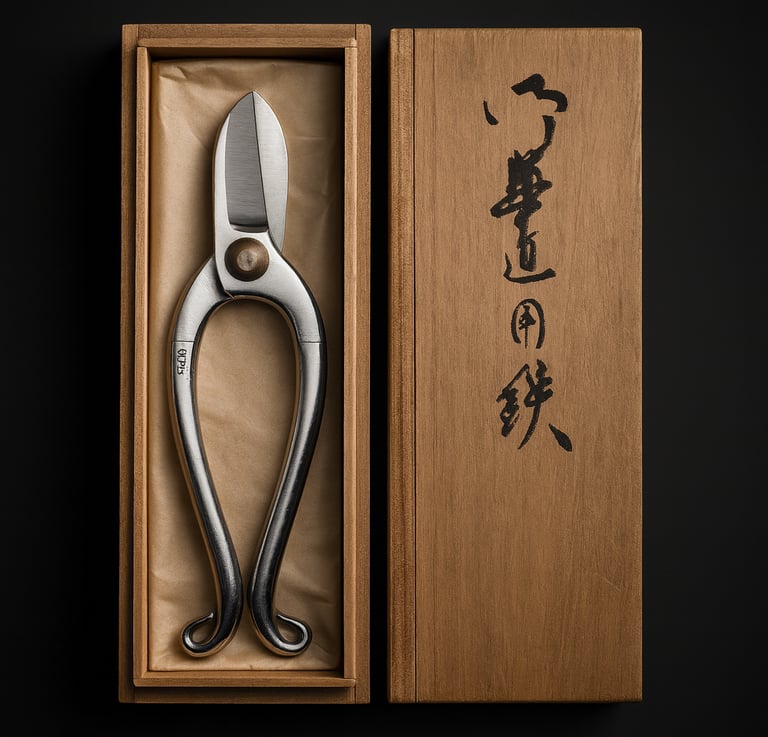
Sharp craftsmanship from Japan – directly from Kasumiya
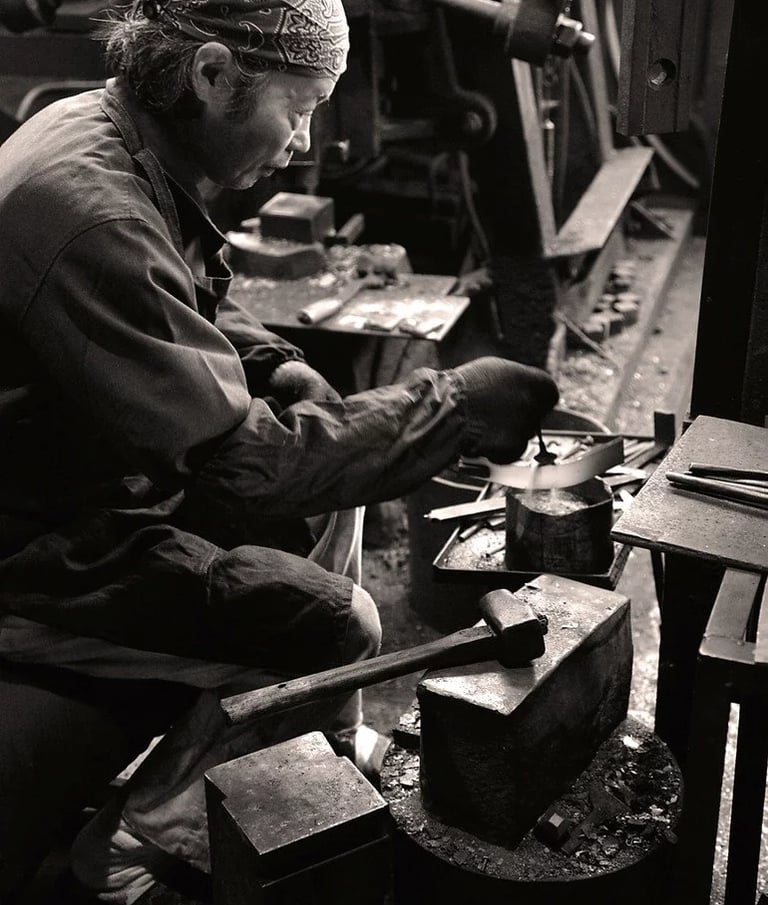
At Kasumiya you’ll find hand-forged knives from Japan, often made from Aogami or Shirogami steel, as well as original Higonokami from traditional workshops. Many pieces are selected in person by us in Japan or come to us through our family’s antiques business in Nagoya. So you’re not just pulling a sharp tool out of the drawer, but a small piece of Japanese craft history.
What are Japanese kitchen knives, anyway?
Japanese kitchen knives differ from many European knives in shape, grind and material. They are typically:
Hard steel for long-lasting sharpness
Thin blades for clean, precise cuts
Specialised blade shapes depending on their purpose
Some important types:
Santoku – all-rounder for vegetables, fish and meat, perfect for everyday cooking
Gyuto – the “Japanese chef’s knife”, similar to a European chef’s knife
Deba – sturdy knife for breaking down fish (including small bones)
Yanagiba – long, narrow blade for sashimi and ultra-thin slices
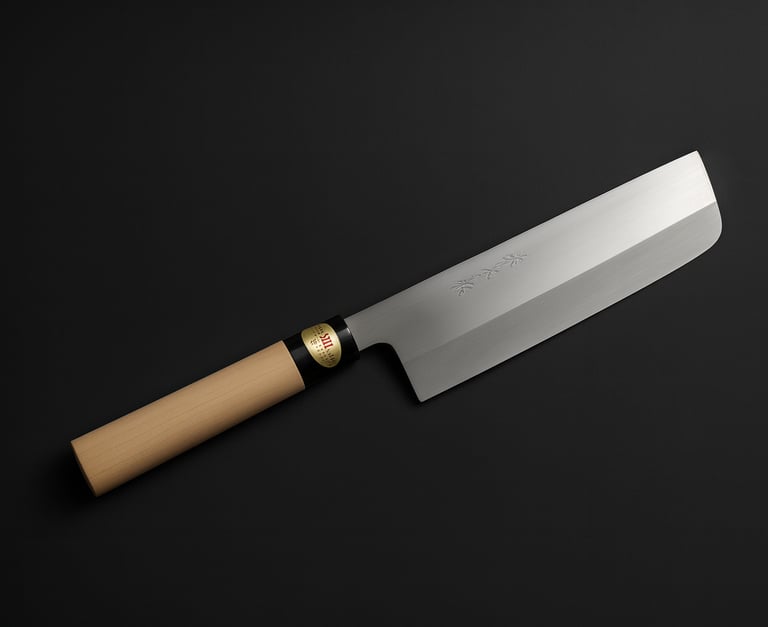
Nakiri – straight-edged vegetable knife for fine, precise cubes and slices
These knives are made for careful cutting – not “chopping”. They reward clean technique with impressive sharpness and control.
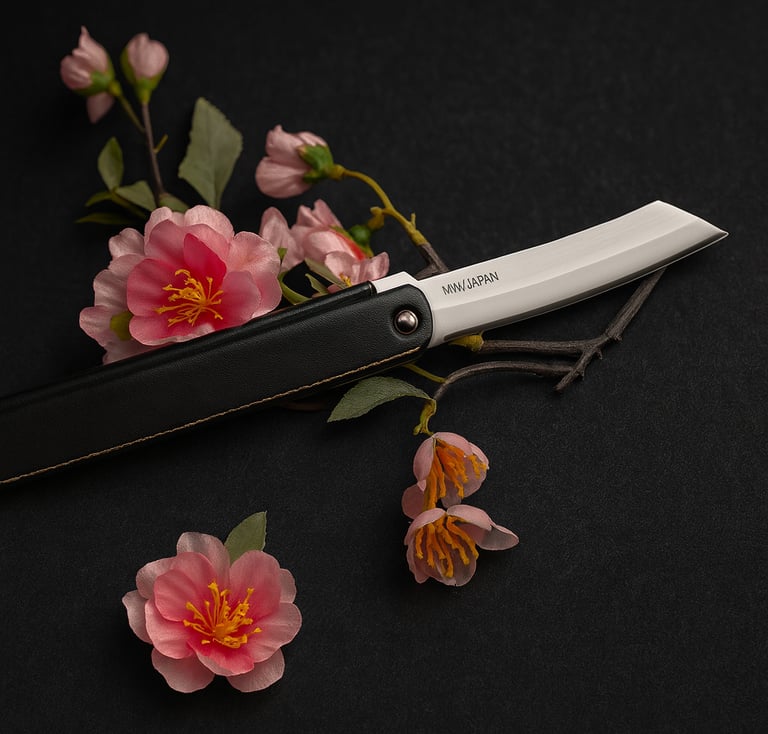
What is a Higonokami?
Higonokami is a traditional Japanese folding knife with:
a simple, robust construction without a locking mechanism
a sharp blade, often made from carbon steel (e.g. Aogami)
the typical “nail nick” lever you use to open the knife
a plain metal handle that develops a patina over time
Originally intended as an inexpensive everyday knife for school, craft and household use, Higonokami are now sought-after collectibles and practical companions – ideal for opening packages, carving, and smaller cutting tasks on the go or in the studio.
Who are Japanese kitchen knives & Higonokami suitable for?
Japanese kitchen knives are ideal if you:
enjoy cooking and like working precisely
love fresh ingredients such as fish, vegetables and herbs
value sharp, high-quality tools
appreciate traditional craftsmanship and beautiful everyday objects
A Higonokami is right for you if you:
are looking for a simple, honest pocket knife
enjoy collecting – many Higonokami come in different sizes and versions
love Japanese everyday culture and want to carry an authentic piece of it with you
If you’re willing to give your tool a little care, you’ll get knives that can accompany you for many years.
How can you recognise quality in Japanese knives?
You can recognise a good Japanese knife by several factors:
Steel quality
High-quality steels such as Aogami (Blue Paper Steel) or Shirogami (White Paper Steel) can be made extremely sharp and finely honed.
They can be resharpened and hold their edge for a long time.
Clean grind
Even bevel (cutting edge) without waves or nicks
For single-bevel knives (e.g. Yanagiba), a clean, straight hollow grind
Fit and finish of handle and blade
No sharp edges at the transition
Blade sits firmly, nothing wobbles or rattles
Origin & “handwriting”
Many knives bear the stamp or engraving of the smith
Small irregularities can indicate genuine handcraft and make the knife unique
Similar criteria apply to Higonokami: a cleanly ground blade, a smooth but stable action, and a handle that feels comfortable in the hand.
What should you consider when buying?
To help you find the right knife, these questions are useful:
What will you mainly use the knife for?
Lots of vegetables? → Santoku or Nakiri
Fish & sushi? → Deba (breaking down) + Yanagiba (fine slicing)
All-round kitchen use? → Gyuto or Santoku
How much maintenance is okay for you?
Carbon steel (e.g. Aogami, Shirogami): very sharp, develops patina, should be dried immediately after washing
Stainless / semi-stainless steels: a bit easier to care for, often with just a touch less “bite” in the edge
Size and handling
Kitchen knives come in various lengths – many people feel most comfortable with a blade length of around 18–21 cm.
Make sure the knife fits your hand well and that you feel safe using it.
For Higonokami
What size do you need? (Small for your pocket, larger for a tool roll or studio)
Do you want a simple everyday version or a special collector’s piece, e.g. with damascus pattern or special engraving?
How do you use and care for Japanese kitchen knives & Higonokami?
With the right care, you’ll enjoy them for a long time:
Care of kitchen knives
Do not put them in the dishwasher!
Heat, salt and detergents attack the steel and handle. Always wash by hand.
Dry immediately
Especially with carbon steel: dry straight away with a cloth after washing so that no rust spots can form.
Use the right cutting board
Wooden or plastic board instead of glass, marble or ceramic – this protects the edge.
Sharpen correctly
Ideally with a Japanese water stone. This preserves the fine geometry of the blade and restores a razor-sharp edge.
Gentle use
Don’t “chop” bones, don’t pry, and don’t cut frozen food – Japanese blades are too fine for that.
Care of Higonokami
Wipe the blade after use and keep it dry
For carbon steel, occasionally apply a hint of camellia oil or another food-safe oil
If needed, put a tiny drop of oil on the pivot for smooth opening
Do not leave it in damp environments (e.g. bathroom, wet tent, etc.)
What does Kasumiya specifically offer in this area?
At Kasumiya you’ll find a carefully curated selection of:
Japanese kitchen knives – from all-round Santoku to specialised Deba or Yanagiba
Higonokami folding knives – from simple everyday models to special pieces with history
Vintage & antique knives – one-of-a-kind pieces with patina and character
Accessories such as traditional knife sleeves, wooden sheaths or selected cutting boards (depending on current stock)
Many of our knives come from small workshops, flea markets or antique shops in Japan. Part of our range comes directly via our family’s antiques business in Nagoya. This means you’ll often find pieces with us that you won’t see in the usual mass-market offerings.
You can find our current knife selection in our
eBay shop in the category “Japanese Knives & Higonokami”
and – depending on availability – also in further subcategories.
(You can access the exact links here on the site or via our menu.)
Your path to the right knife
If you’re unsure which knife suits you, these guiding questions can help:
Do you cook daily and a bit of everything? → Santoku or Gyuto
Do you love fish and Japanese cuisine? → Deba + Yanagiba
Do you collect Japanese everyday objects or need a practical pocket knife? → Higonokami
And if you’re torn between several pieces, let the story behind them guide you:
Are you looking for a “workhorse” for the kitchen – or a special one-off with visible hammer marks and patina?
Feel free to contact us! With over 20 years of experience in knife making, we’ll be happy to help you.