

Temples and Shrines in Japan – Where Gods, Buddhas, and Silence Meet
Temples and shrines shape Japan’s spiritual landscape. Discover the differences between Shintō and Buddhism, their rituals, symbols, and meaning.
12/26/20253 min read

What Is a Shintō Shrine?
A Shintō shrine (jinja) is a sacred place dedicated to kami—spiritual beings that inhabit natural elements such as mountains, rivers, trees, rocks, and even ancestral spirits.
Shintō is not a dogmatic religion. It has no founder, no sacred scripture in the Western sense, and no concept of original sin. Instead, it is a nature-centered belief system focused on harmony, purity, and gratitude.
Shrines often mark a threshold: the transition from the ordinary world into a purified, sacred space.
Key Elements of a Shintō Shrine
Torii Gate
The iconic red or wooden gate signals entry into sacred ground. Passing beneath it is a symbolic act of leaving the mundane behind.Temizuya (Purification Basin)
Visitors cleanse hands and mouth with water before prayer—an essential Shintō concept emphasizing ritual purity.Haiden (Worship Hall)
The public space where visitors offer prayers.Honden (Main Sanctuary)
The inner, often inaccessible structure where the kami is enshrined.
Expert insight:
Some of Japan’s oldest shrines have no main building at all. In these cases, a mountain, forest, or stone itself is the object of worship—highlighting Shintō’s deep connection to the natural world.
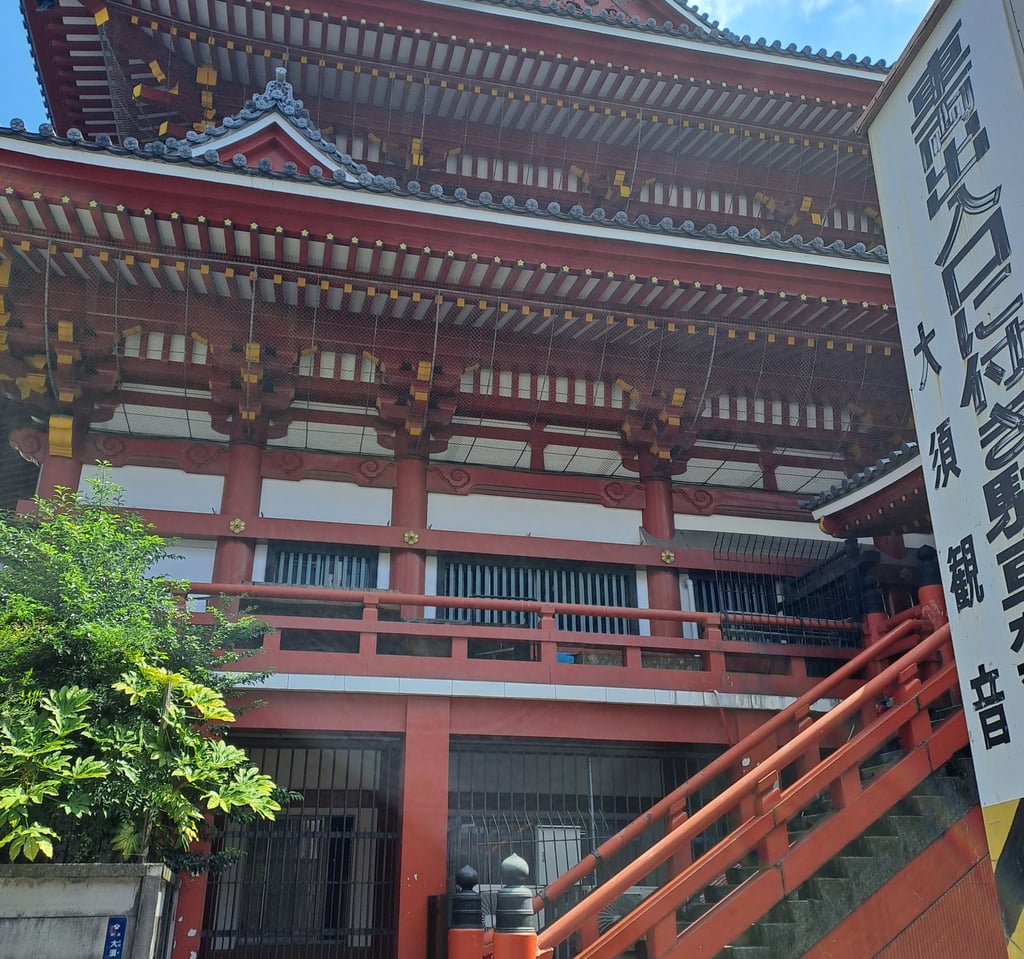
What Is a Buddhist Temple?
A Buddhist temple (otera) is a place of practice, teaching, and remembrance within the Buddhist tradition, which arrived in Japan from the Asian continent around the 6th century.
While Shintō focuses on life, nature, and celebration, Buddhism addresses suffering, impermanence, death, and enlightenment. Temples serve as centers for meditation, ritual, funerary services, and philosophical study.
Different Buddhist schools—Zen, Pure Land, Shingon, Nichiren—shape the appearance and practices of each temple.
Typical Features of a Buddhist Temple
Temple Gate (Sanmon)
Often large and imposing, symbolizing the entrance to the Buddhist path.Main Hall (Butsuden or Hondō)
Houses statues of Buddhas or Bodhisattvas.Pagoda
A multi-tiered tower symbolizing Buddhist cosmology and sacred relics.Incense Burner (Kōro)
Visitors light incense, letting the smoke pass over them as a gesture of purification and prayer.
The Key Differences at a Glance
1. Spiritual Focus
Shrine (Shintō): Kami, nature, life, protection, harmony
Temple (Buddhism): Buddha, enlightenment, impermanence, afterlife
2. Visual Clues
If you’re unsure, look for these signs:
Torii gate → Shrine
Incense smoke → Temple
Name endings:
-jinja or -jingu = shrine
-ji or -dera = temple
3. Prayer Rituals
At a Shrine:
Purify at the water basin
Offer a coin
Bow, clap (often twice), pray silently, bow again
At a Temple:
Light incense (optional but common)
Join hands and pray quietly
No clapping—silence and stillness are key
Why Do Some Places Feel “Mixed”?
Japan’s religious history is not a story of strict separation. For over a thousand years, Shintō and Buddhism coexisted and blended in a system known as Shinbutsu-shūgō—the fusion of kami and Buddhas.
Kami were often seen as local manifestations of Buddhist deities, and many sacred sites functioned as both shrine and temple.
This changed in the late 19th century during the Meiji Restoration, when the government enforced Shinbutsu bunri—the formal separation of Shintō and Buddhism. Shrines and temples were redefined, and mixed elements were removed or reassigned.
What this means today:
Some sites still feel ambiguous. When in doubt, trust the dominant symbols: torii and purification rituals suggest a shrine; incense, pagodas, and Buddha statues point to a temple.
Reading the Atmosphere: Deeper Symbolism
Guardians and Sacred Boundaries
Shrines often feature komainu (lion-dog guardians) and sacred ropes (shimenawa) marking pure spaces.
Temples display fierce guardian statues, lanterns, and iconography linked to Buddhist teachings.
Goshuin: More Than a Souvenir
Both temples and shrines offer goshuin—handwritten seals and calligraphy stamped into a pilgrim book. Each reflects the institution’s spiritual identity, and collecting them is considered an act of devotion rather than tourism.
Frequently Asked Questions
Can non-religious visitors enter temples and shrines?
Yes. These places are deeply woven into daily life and culture. Respectful behavior—quiet voices, observing rules, and avoiding restricted areas—is all that is expected.
Is one more “important” than the other?
No. Shrines and temples serve different spiritual needs. Many Japanese people visit both, depending on the occasion—shrines for life events and good fortune, temples for remembrance and reflection.
Conclusion: Two Traditions, One Spiritual Landscape
The difference between temples and shrines in Japan is clear once you know what to look for:
Shrines express Shintō’s reverence for nature, life, and invisible forces.
Temples embody Buddhism’s search for insight, compassion, and liberation from suffering.
Together, they form a uniquely Japanese spiritual tapestry—quiet, layered, and deeply human.
To stand in front of a torii gate or feel incense smoke rise in a temple courtyard is to experience Japan not just as a place, but as a philosophy lived in wood, stone, and silence.