

Shikishi (色紙) – The Noble Artistic Surface of Japanese Aesthetics
Shikishi (色紙) is a traditional Japanese art format used for calligraphy, haiku, and painting. Meaning, usage, and cultural background explained.
Seiko Begert
12/29/20252 min read
What Is a Shikishi?
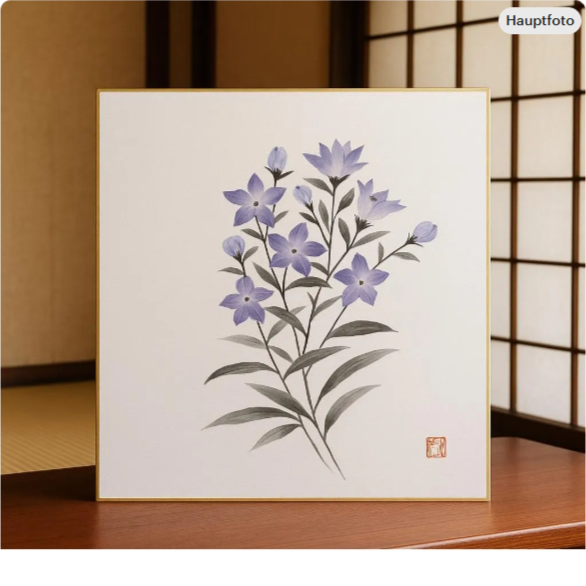
A shikishi is a sturdy, traditional Japanese cardboard panel primarily used for calligraphy, poetry, and painting. It is characterized by its nearly square format (approx. 24 × 27 cm) and its elegant gold or silver border, which gives the work a ceremonial frame.
Unlike simple paper, shikishi is significantly thicker and dimensionally stable. As a result, it does not feel like a draft, but like a completed artwork that can be presented without further mounting or processing.
Historical and Cultural Background
The use of shikishi developed from Japan’s courtly and literary culture. From early on, poems, dedications, and calligraphy were recorded on particularly refined paper formats. The aim was not to write a great deal, but to express what mattered most with precision and care.
This attitude is closely connected to Zen aesthetics, reduction, and a conscious use of space. Poets such as Matsuo Bashō shaped this way of thinking: few syllables, great depth. Shikishi thus became the ideal medium for words meant to endure.
What Is Shikishi Used For?
Shikishi in Calligraphy (Shodō)
The classic use of shikishi is Japanese calligraphy. Common subjects include:
single kanji with strong symbolic meaning
Zen quotations or life wisdom
short poems or haiku
The limited surface demands the highest level of concentration. Every brushstroke is final—this is precisely what makes shikishi so demanding and at the same time so expressive.
Shikishi for Haiku and Poetry
Haiku thrive on condensation. Shikishi provides the perfect frame for this balance. Text and emptiness exist in harmony, allowing what is left unsaid to become just as important as what is written.
Shikishi in Painting and Illustration
In addition to writing, shikishi is also used for ink and watercolor paintings. Popular motifs include:
bamboo, plum blossoms, cranes
landscapes and seasonal themes
abstracted representations of nature
Modern artists, too, deliberately use shikishi as a contrast to large-scale formats.
Signatures, Dedications, and Honorary Gifts
Shikishi are often signed and given as gifts—for example by artists or masters, or on special occasions. A signed shikishi is not considered a souvenir, but a sign of personal appreciation.
Why Shikishi Holds Special Significance
Shikishi is not a neutral material. It represents:
mindfulness and concentration
respect for both content and recipient
timelessness rather than transience
conscious reduction
In a culture that seeks perfection in detail, shikishi becomes a stage for what truly matters.
Shikishi as a Gift
A hand-written or painted shikishi is a deeply personal gift in Japan. It is not given casually, but chosen with intention—such as for:
farewells
anniversaries
expressions of gratitude
spiritual or personal turning points
Material value is secondary. What matters is the time, attitude, and meaning invested in it.
Conclusion: Small Surface, Powerful Statement
Shikishi is a quiet yet powerful bearer of Japanese culture. It unites word, image, and space into a harmonious whole and reminds us that true depth often emerges where limitation is embraced. To look at a shikishi is not merely to see writing or color—but a way of relating to life itself.