

Japanese Tokonoma – Meaning, Origins, and Design
What is a Japanese tokonoma? Discover its origins, meaning, design principles, and why it is the heart of traditional living culture.
12/24/20253 min read
What Is a Japanese Tokonoma?
Definition and Core Concept
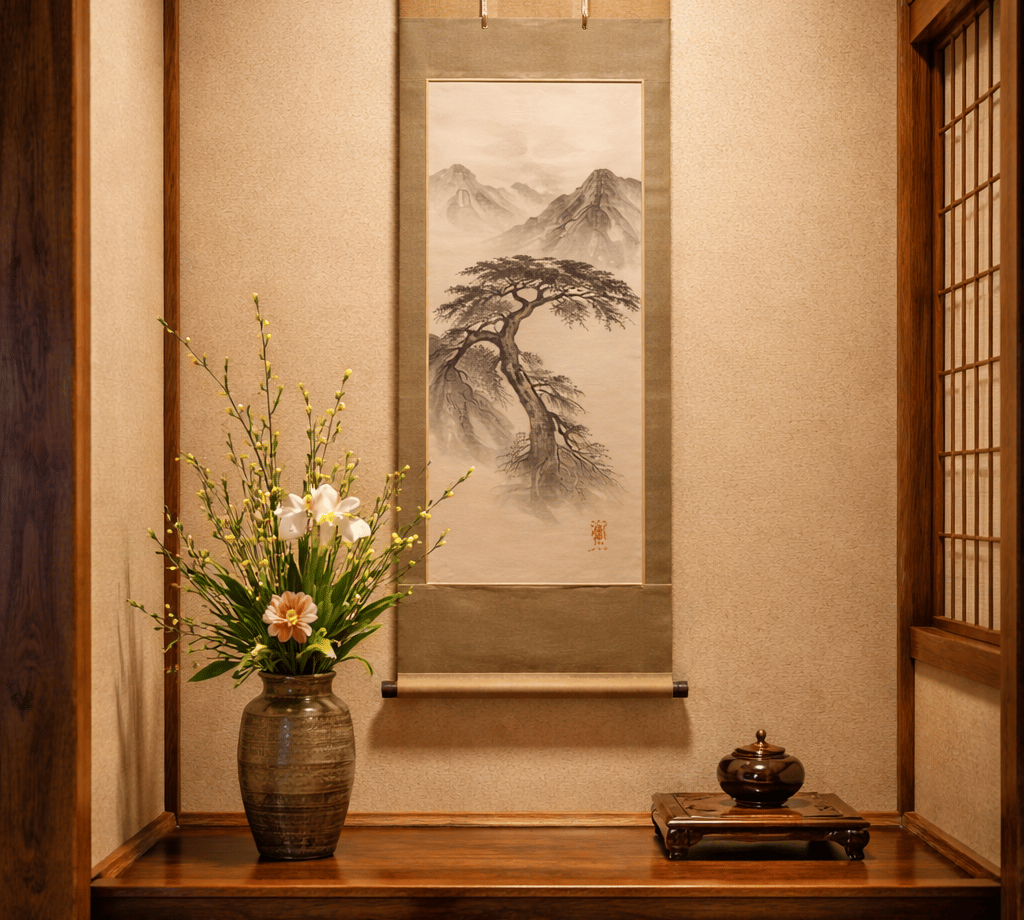
A tokonoma is a slightly raised, usually rectangular wall alcove found in traditional Japanese rooms. It is used to present carefully selected objects such as hanging scrolls, floral arrangements, or handcrafted pieces. The focus is not on quantity, but on deliberate selection.
Difference from Western Decoration
Unlike Western interior concepts, where decoration is often permanent and ornamental, the tokonoma follows a clear principle:
few objects
clear order
limited duration
strong symbolic meaning
The tokonoma is neither a shelf nor a gallery—it is a place of concentration.
Historical Origins of the Tokonoma
Development in Japanese Architecture
The origins of the tokonoma date back to the 14th century. It evolved from Buddhist altar niches and was initially used in the residences of the nobility and samurai. Later, it became a defining element of the Shoin-zukuri style, a classical form of Japanese residential architecture.
Connection to the Tea Ceremony
The tokonoma gained particular significance through its connection to the Japanese tea ceremony. Here, it became the spiritual focal point of the room. The hanging scroll displayed in the tokonoma often defined the theme of the gathering and set its intellectual and emotional tone.
The Cultural Significance of the Tokonoma
Expression of Respect and Hierarchy
Traditionally, the most honored guest sits closest to the tokonoma—but never inside it. This seating arrangement expresses deep respect for the object being displayed. The tokonoma itself remains untouched.
A Reflection of Japanese Values
The tokonoma embodies core principles of Japanese culture:
restraint instead of excess
silence instead of loudness
meaning instead of possession
It is a place where inner attitude becomes visible.
Elements of a Classical Tokonoma
Kakemono – The Hanging Scroll
The kakemono is often the central element of the tokonoma. It may feature calligraphy, poetry, or ink painting. Its subject is chosen according to the season or occasion and is changed regularly.
Ikebana – Floral Restraint
Floral arrangements in the tokonoma follow the principles of ikebana. They are minimalist, asymmetrical, and emphasize natural lines rather than abundant blossoms.
Additional Objects
Other elements may include:
ceramics
wooden sculptures
incense containers
seasonal natural materials
Often, a single object is enough.
Design Principles and Aesthetics
The Principle of Empty Space
A key design element of the tokonoma is empty space. Emptiness is not a lack, but a carrier of calm and tension.
Seasonal Change
A tokonoma is never static. Motifs, colors, and materials reflect spring, summer, autumn, and winter, keeping it alive and relevant.
Harmony of Material and Content
The wood type, wall color, and floor materials of the tokonoma are carefully chosen to support the displayed objects rather than dominate them.
The Tokonoma in a Modern Context
Contemporary Interpretations
Even in modern Japanese homes and international interior design, tokonoma-inspired niches can be found. They are often more minimal, sometimes without traditional scrolls, yet they retain their calming function.
Tokonoma as a Source of Inspiration
Many designers use the concept of the tokonoma as inspiration for:
meditation spaces
minimalist wall niches
focused art presentation
The concept is not copied, but interpreted.
Benefits of a Tokonoma in Living Spaces
Mental Calm in Everyday Life
A tokonoma creates a conscious place of stillness within a room. It invites pause and has a calming effect.
Mindful Relationship with Objects
Because only a few objects are displayed, the tokonoma encourages appreciation rather than consumption.
Timeless Aesthetic
Independent of trends, the tokonoma remains stylistically enduring and relevant.
Possible Drawbacks and Misunderstandings
Lack of Cultural Understanding
Without awareness of its cultural depth, the tokonoma may be treated as mere decoration, losing its meaning.
Inappropriate Overloading
Too many or visually restless objects contradict the core idea and create disturbance.
Frequently Asked Questions About the Japanese Tokonoma
Does a tokonoma have to be traditional?
No. What matters is not form, but attitude: reduction, mindfulness, and conscious selection.
Can you create a tokonoma yourself?
Yes—if the principles are respected. Less matters more than perfection.
Is the tokonoma used daily?
It is not a functional space, but a place for viewing and inner reflection.
Conclusion: Tokonoma as an Attitude, Not an Object
The Japanese tokonoma is far more than an architectural feature. It is a mirror of cultural values, a place of stillness, and a counterbalance to the sensory overload of modern life.
Those who engage with the tokonoma discover not just a design concept, but a different way of perceiving space, time, and objects. The tokonoma teaches that true impact often lies in restraint—and that silence can sometimes speak louder than words.