

Japanese Maki-e – Exquisite Lacquer Art with Gold & History
Japanese Maki-e: traditional lacquer art with gold and silver. History, techniques, meaning, and modern applications clearly explained.
11/16/20252 min read
What Is Japanese Maki-e?
Definition of the Maki-e Technique
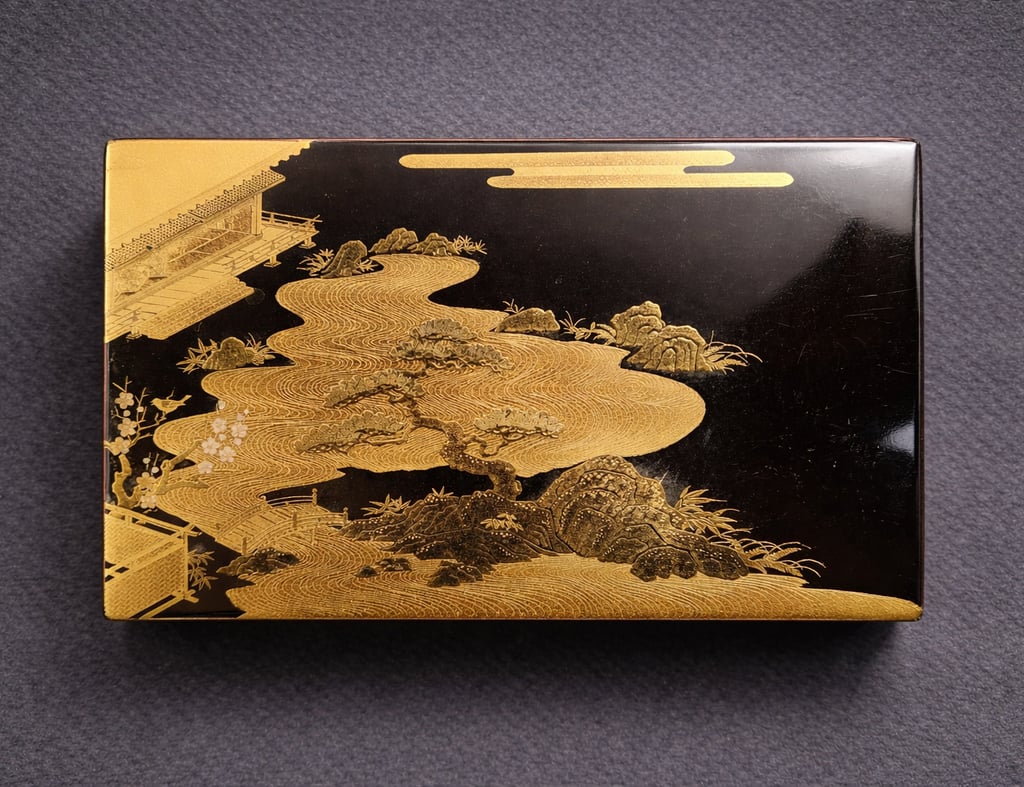
Japanese Maki-e is a decorative lacquer technique in which metal powders—usually gold or silver—are sprinkled onto still-wet Urushi lacquer. Once hardened, the surface reveals a durable, glossy finish with remarkable depth.
Meaning of the Term “Maki-e”
The word “Maki-e” (蒔絵) literally means “sprinkled picture,” perfectly describing the process in which metal powder is gently scattered over the painted design.
The History of Japanese Maki-e
Origins and Development
The history of Japanese Maki-e dates back to the 8th century. During the Heian period in particular, the technique evolved into a highly prized art form created primarily for the imperial court and aristocracy.
Maki-e as a Status Symbol
Writing boxes
Jewelry and storage cases
Ceremonial objects
Prestige gifts with symbolic meaning
Maki-e has always represented refinement, education, and social status.
Materials Used in Maki-e Lacquer Art
Urushi – Japanese Lacquer
At the heart of every Japanese Maki-e work is Urushi, a natural lacquer derived from the sap of the lacquer tree. It is known for being:
extremely durable
long-lasting
deep and glossy in appearance
Metal Powders
Different metal powders are used in Maki-e:
fine gold
silver
tin
metal alloys
The grain size of the powder strongly influences the shine and texture of the final design.
The Maki-e Creation Process
Surface Preparation
The base surface is lacquered, polished, and cured multiple times. This preparation can take weeks or even months and requires exceptional precision.
Applying the Design
The motif is painted with Urushi lacquer using fine brushes. Metal powder is then carefully sprinkled onto the wet lacquer.
Sealing and Polishing
After drying, the surface is:
lacquered again
partially polished
refined through several layers
This process creates the characteristic depth and brilliance of Japanese Maki-e art.
Different Maki-e Techniques
Hira Maki-e
A flat Maki-e technique with a smooth surface, valued for its subtle elegance.
Taka Maki-e
A raised relief technique in which the design appears three-dimensional. This is one of the most elaborate forms.
Togidashi Maki-e
The design is polished back after lacquering, allowing the motif to emerge softly from the surface.
Motifs and Symbolism in Maki-e Art
Natural Motifs
cherry blossoms
cranes
waves
bamboo
These motifs symbolize transience, strength, harmony, and longevity.
Mythology and Poetry
Many Maki-e works reference classical poetry, legends, or seasonal themes, transforming objects into visual narratives.
Applications of Japanese Maki-e
Traditional Objects
writing instruments
tea containers
lacquer bowls
decorative boxes
Modern Uses
Today, Japanese Maki-e can also be found on:
high-end fountain pens
designer objects
jewelry
contemporary artworks
This keeps the tradition alive while adapting it to modern aesthetics.
Advantages and Possible Challenges
Advantages of Maki-e Art
Exceptional durability
Unique visual depth
High cultural value
Each piece is one of a kind
Challenges
Extremely time-consuming production
High cost
Requires highly specialized artisans
Frequently Asked Questions About Japanese Maki-e
Is Maki-e true handcraft?
Yes, traditional Japanese Maki-e is entirely handcrafted. No machines are used in the classical process.
How should Maki-e objects be cared for?
Maki-e should be protected from:
direct sunlight
high humidity
mechanical stress
Gentle cleaning is sufficient to maintain its beauty.
Conclusion
Japanese Maki-e is far more than a decorative technique. It is an expression of centuries-old craftsmanship, aesthetic philosophy, and cultural identity. Each piece embodies time, patience, and precision in a form that feels timeless and enduring.
Those who explore Japanese Maki-e discover not only stunning works of art, but also a deep insight into Japanese culture and its understanding of beauty, tranquility, and perfection.