

Japanese Irori Fireplaces – Tradition, Design & Meaning
Japanese irori fireplaces: history, structure, use, and modern interpretations—everything you need to know about Japan’s traditional hearth.
12/23/20253 min read

What Is a Japanese Irori Fireplace?
Definition and Core Principle
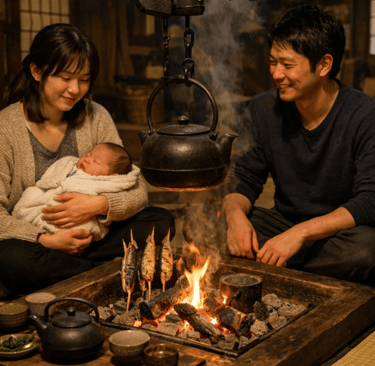
A Japanese irori fireplace is an open hearth set into the floor, traditionally fueled by charcoal. It is usually located in the main living space and forms an integral part of classical Japanese architecture.
Meaning of the Term “Irori”
The word irori (囲炉裏) can be loosely translated as “enclosed fire.” This name highlights the central role of the hearth as a surrounding focal point within the room.
The History of Irori Fireplaces in Japan
Origins and Development
The history of Japanese irori fireplaces dates back more than a thousand years. They were especially common in rural areas and mountain villages, where they played an essential role in daily life.
Irori in Traditional Everyday Life
heat source during cold seasons
cooking area for daily meals
gathering place for family and guests
light source in the evening
The continuous smoke also preserved wooden beams and protected homes from pests—an important practical side effect of the open hearth.
Structure of a Traditional Irori Fireplace
The Hearth Pit
The fire pit is typically framed with wood or clay and filled with ash or sand. Charcoal burns evenly within it, allowing controlled heat.
Jizaikagi – The Adjustable Hook
Above the hearth often hangs a jizaikagi, a height-adjustable hook made of wood or bamboo. It is used to suspend:
tea kettles
pots
cooking vessels
This allows flexible control of heat while cooking.
Seating Arrangement and Spatial Order
Seating around the irori traditionally followed strict rules. Certain positions were considered seats of honor, emphasizing the social significance of the hearth.
Uses of Japanese Irori Fireplaces
Cooking Over an Open Fire
An irori allows the preparation of many traditional dishes:
grilled fish
stews
rice dishes
tea and sake
The steady charcoal heat creates a distinctive flavor.
Heating and Indoor Climate
Irori fireplaces emit consistent, gentle warmth. Unlike modern heating systems, they create a natural indoor climate often described as especially comforting.
Symbolism and Cultural Meaning
Irori as the Heart of the Home
In Japanese culture, the irori symbolizes:
continuity
togetherness
a sense of security
It is a place of exchange and calm—a counterbalance to the rush of everyday life.
Spiritual Aspects
The fire of the irori symbolically connects heaven, earth, and humanity. In ancient traditions, it was regarded as a purifying and protective element.
Difference Between Irori and Kamado
Irori Fireplace
integrated into the living space
open hearth
used for heating and cooking
social center of the home
Kamado Stove
usually located in the kitchen
closed system
purely for cooking
functional rather than social
This distinction explains why irori fireplaces hold such a special place in Japanese culture.
Modern Irori Fireplaces
Irori in Contemporary Architecture
Today, irori fireplaces are experiencing a revival. They appear in:
ryokan and traditional inns
upscale restaurants
modern homes as design elements
Adaptation to Modern Standards
Modern irori interpretations often use:
gas
electric heating systems
This allows compliance with current safety and fire regulations while preserving the traditional character.
Advantages and Possible Drawbacks
Advantages of Japanese Irori Fireplaces
unique atmosphere
traditional cooking experience
strong design statement
deep symbolic meaning
Possible Drawbacks
high space requirements
smoke development in traditional versions
increased maintenance
legal building regulations
Frequently Asked Questions About Japanese Irori Fireplaces
Are irori fireplaces still permitted today?
This depends on local building and fire safety regulations. Traditional open hearths are usually allowed only in specially designated buildings.
Can an irori fireplace be recreated today?
Yes, but careful planning is required—especially regarding ventilation and safety.
Conclusion
Japanese irori fireplaces are a fascinating cultural heritage with deep historical and symbolic significance. They unite cooking, warmth, and community in a way rarely found in modern living concepts.
Whether as an authentic original or a contemporary reinterpretation, the irori remains a symbol of Japanese residential culture and timeless comfort. Anyone who explores Japanese irori fireplaces discovers not just a hearth, but an entire philosophy of living—centered on calm, togetherness, and mindful dwelling.